
Triangle 101: Expressive Triangle Playing for Every Percussionist

How to Approach the Triangle with Musicality and Intent
The triangle is an instrument of immense color and nuance, yet it is often the most overlooked piece in the percussion cabinet. It has the power to cut through a full fortissimo orchestra or provide the most delicate, silver-thread shimmer in a quiet solo. Moving beyond a basic "ding" requires more than just rhythm; it requires a deep understanding of gear, physics, and dampening. In this guide, we’ll explore the professional fundamentals that transform a triangle into a truly expressive musical voice.
Table of Contents
Don't miss a post! Sign up for the Black Swamp Newsletter!
Meet Your Instructor: Dr. Trevor Barroero

Dr. Trevor Barroero is an award-winning percussionist and dedicated educator. Currently serving as the Principal Percussionist of the Tucson Symphony Orchestra, Trevor has performed as a soloist across the globe, including appearances with the Moscow Symphony and The U.S. Army Band "Pershing's Own." His diverse performance career includes sharing the stage with Andrea Bocelli and appearing on ABC Primetime Specials.
A founding member of the history-making trio Lineage Percussion, Dr. Barroero is passionate about empowering musicians. He holds a Doctor of Musical Arts from the University of Georgia and maintains a private studio of over 40 students. He is proudly endorsed by Black Swamp, Pearl/Adams, Remo, Vic Firth, and Zildjian.
Gear Tour: The Overture Triangle
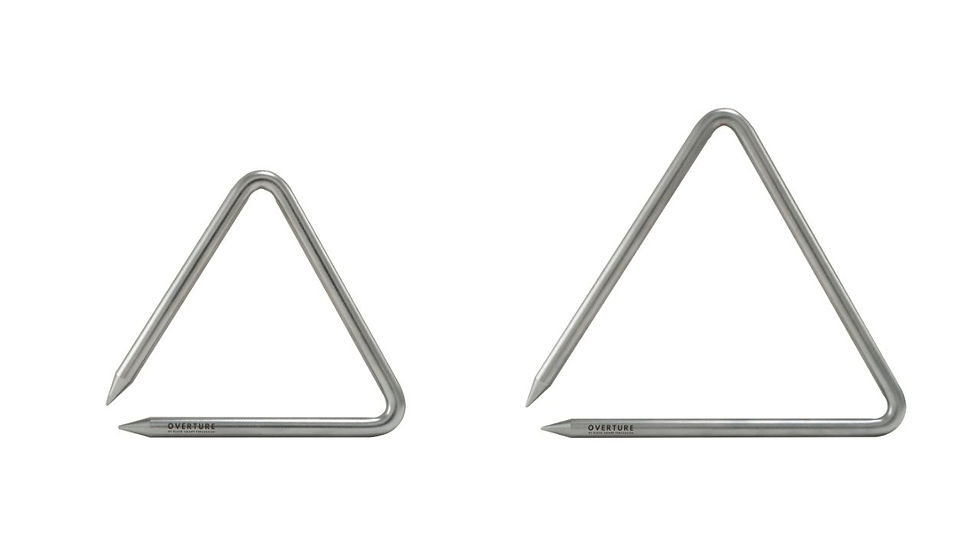
Quality gear is the foundation of a professional sound. For this series, Dr. Barroero utilizes the Overture Steel Triangles from Black Swamp Percussion. These instruments are specifically designed for the needs of band and orchestra students, offering a clear, resonant tone and durability that provides incredible value.
However, a great triangle is only as good as its accessories:
The Clip: Dr. Barroero warns against using shoelaces or hair ties. A professional clip like the Black Swamp Triangle Clip uses double suspension lines and vinyl padding to eliminate hardware rattle and ensure the instrument can vibrate freely.
The Beaters: Your choice of beater determines your color. The Spectrum end weighted beaters offer maximum overtones and a warmer sound, while the Select rod-style beaters provide a brighter, more articulated "ping."
Pro Tip: Don't grab a tiny beater just because the music is soft. A larger beater often provides more overtones and a richer resonance that helps a soft note speak clearly through the ensemble.
Holding and Striking: Foundations of Sound
How you hold the instrument dictates how much control you have over its resonance. Dr. Barroero recommends balancing the clip on the thumb and middle finger, using the index finger to brace the top for stability. This leaves the remaining fingers free to act as "brakes" for the sound.
The Striking Spot: To maximize shimmer, always strike near a closed corner (the bottom or top corner where the metal is bent). Striking in the middle of a side often produces a single pitch rather than a complex wash of overtones.
The Angle: Hold your beater at a 45-degree angle to the instrument. This "glancing" blow creates a broad spectrum of sound. Striking perfectly parallel or perpendicular results in a "clunky" or overly pitched tone.
Achieving Articulation: Dampening and Muffling Techniques
Controlling the sustain of the triangle is what separates a student from a professional. You must be able to move between a long, ringing resonance and a short, dry "staccato" sound.
Two Ways to Control Decay:
1. The "Finger Brake" (Light Dampening) For fast, articulated rhythms, place your ring or pinky finger lightly against the top bar of the triangle. This doesn't stop the sound entirely, but it "dries up" the resonance so the listener can hear the individual notes of a rhythm.
2. The Full Muffle (Closing the Phrase) To end a note or silence the instrument during rests, close your entire hand around the metal. Dr. Barroero suggests doing this gradually to allow for a natural fade, rather than a sudden, jarring stop—unless the music specifically calls for an abrupt cutoff.
Comparing Articulation Approaches
Open (No Dampening): Best for long, solo notes or slow melodies where you want maximum sustain and a rich "halo" of sound.
Lightly Dampened (Finger on Bar): Best for fast technical passages or rhythmic "tutti" sections where clarity is more important than ring.
Mounted (Leg Muffling): When the triangle is on a stand, you can press the instrument against a towel draped over your knee to achieve a similar dry effect.
The Art of the Roll: Creating Sustained Shimmer
A professional triangle roll should sound like a continuous shimmer, not a "dinner bell." This is achieved by rolling in a closed corner.
The secret to a great roll isn't speed—it's consistency. If you roll too fast, the sound becomes "choked" and noisy. By slowing down slightly and maintaining a relaxed stroke, you allow the instrument's overtones to bloom into a smooth, seamless sustain.
Check out how Black Swamp Artist, Andrea Venet, approaches triangle rolls in this blog post.
Practical Application: Exercises and Repertoire
To build your skills, Dr. Barroero suggests practicing a simple four-measure rhythm in three different ways:
Single Handed: Focus on a relaxed stroke on the bottom edge.
Alternating Sides: Play between the bottom and side of the closed corner to build agility.
Mounted Two-Handed: Use two beaters on a mounted triangle for maximum speed and control.
Musical Spotlight: In Bizet’s Carmen, the "Dance bohème" features a delicate triangle solo. Try playing this with an 8-inch triangle to hear how the larger surface area provides a richer color, even at a whisper-quiet dynamic.
Student Action Plan
Audit Your Gear: Replace any "shoelace" hangers with a professional spring-loaded clip to eliminate unwanted noise.
Find Your Corner: Practice striking only in the closed corners at a 45-degree angle to find the most "shimmering" spot on your instrument.
The 5-Minute Roll: Practice rolling at different speeds in the bottom corner. Listen for the moment where the rhythm disappears and becomes a smooth sound.
Check Your Sightlines: Practice holding the triangle at a height where you can see the beater, your music, and an imaginary conductor all at once.
Final Thoughts
The next time you pick up a triangle in rehearsal, ask yourself: What is the length of this note? Should it ring into the next measure, or should it be tucked away with a gentle muffle? By treating the triangle as a melodic instrument rather than a sound effect, you bring a new level of professionalism to your ensemble.
How will you change your approach to the next "simple" triangle part in your folder?


Comments